

Modern home decor in 2026 thrives on clean lines, thoughtful minimalism, and spaces that feel both curated and comfortable. You don’t need a complete renovation or designer budget to achieve this look. Eight strategic updates, from statement lighting to textural layering, can transform your home into a contemporary retreat that reflects current design sensibilities while staying true to your personal style.
The beauty of modern decor lies in its flexibility. Unlike rigid design rules of the past, today’s approach welcomes a blend of materials, periods, and price points. That sculptural floor lamp from a mid-range retailer pairs beautifully with your grandmother’s vintage credenza when you understand the principles of balance and negative space. This accessibility makes cost-effective redecorating not just possible but genuinely stylish.
The ideas ahead focus on achievable changes that deliver maximum visual impact. Each suggestion works independently, so you can tackle one element this weekend or plan a phased refresh over several months. We’ve drawn inspiration from contemporary designers while keeping practicality front and center, because the most beautiful space is one you can actually live in. Whether you’re updating a single room or rethinking your entire home, these concrete strategies will help you create a modern aesthetic that feels both current and timeless.
How We Chose These Modern Decor Ideas
We didn’t just pull these ideas from thin air or chase every passing trend. Our curation process focused on modern decor strategies that actually work in real homes, not just staged magazine spreads. Each idea made the cut based on a few non-negotiable criteria:
- Versatility across different room types and home sizes
- Multiple price points, from budget-friendly to splurge-worthy
- Timeless modern appeal that won’t feel dated next year
- Realistic implementation without professional help
We drew inspiration from current design offerings at accessible retailers like West Elm’s Griffintown location and Jonathan Adler’s modern accessories line, ensuring every recommendation reflects what’s actually available now rather than aspirational concepts you can’t find. We also looked at how full-service firms like Vancouver’s approach contemporary interiors, then translated those professional principles into achievable actions for homeowners and renters.
The result? Eight ideas that work whether you’re refreshing a studio apartment or updating a family home, with options at every budget level. You won’t need a design degree or unlimited funds to pull these off, just a willingness to try something fresh.
1. Sculptural Lighting as Statement Pieces
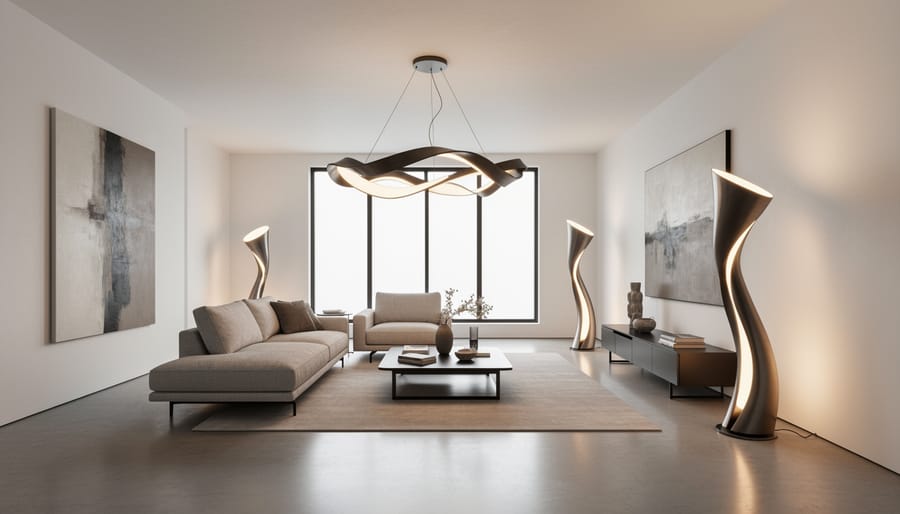
A sculptural lighting fixture transforms from mere utility into the room’s centerpiece. Think of a pendant with asymmetric brass arms, a floor lamp with an arcing marble base, or a chandelier composed of clustered glass orbs. These pieces draw the eye upward and establish your modern aesthetic the moment someone enters the space.
Contemporary brands like Jonathan Adler offer modern accessories that include statement lighting with clean geometry and unexpected materials. You’ll find pendant lights with ceramic shades in bold colors, table lamps with sculptural tripod bases, and floor lamps that double as conversation starters. The key is choosing fixtures where the design itself matters as much as the light it casts.
For budget-conscious updates, look beyond designer showrooms. Online retailers carry geometric pendants starting around $150, and you can swap a basic flush-mount ceiling fixture for a sculptural alternative in an afternoon. Thrift stores occasionally yield vintage modern lamps that need only a new shade or rewiring.
Ceiling height dictates your approach. In rooms with eight-foot ceilings, choose flush or semi-flush fixtures with visual interest rather than lengthy pendants that overwhelm the space. Standard nine-foot ceilings handle most pendant lights when hung 30 to 36 inches above a dining table or kitchen island. Rooms with soaring ceilings become playgrounds for dramatic chandeliers or clustered pendants at varying heights, creating layers of light and shadow that emphasize the vertical space.
Position your statement piece where it anchors a functional zone while remaining visible from multiple angles.
2. Minimalist Furniture with Maximum Impact
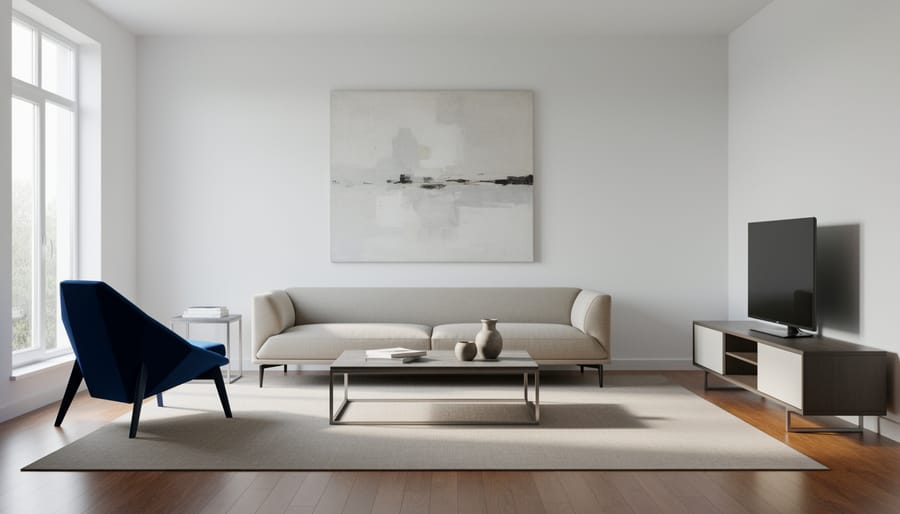
Modern furniture isn’t about cramming every surface, it’s about choosing pieces that earn their footprint. A sofa with clean lines and exposed wooden legs creates visual lightness even in smaller rooms, while a streamlined coffee table with hidden storage serves dual purposes without announcing its practicality. The secret lies in silhouettes that feel intentional rather than bulky.
Retailers like West Elm (including their Griffintown location) have made contemporary design remarkably accessible, offering modular sectionals and slim console tables that work whether you’re furnishing a condo or a suburban living room. Look for furniture that balances form and function: a credenza with cord-management cutouts, a dining table that extends when guests arrive, or a media unit that hides clutter behind flush doors. These aren’t compromises, they’re modern design solving real problems.
The beauty of minimalist furniture is its compatibility with a neutral color palette. Sofas in oatmeal linen or charcoal wool anchor a room with confidence in neutrals allowing you to shift accent colors seasonally through pillows or throws. Walnut and oak finishes add warmth without pattern competition, while matte black metal frames provide subtle edge.
Start with one investment piece, a quality sofa or dining table, then build around it with budget-friendly finds. A sculptural side table from a local maker can hold its own beside a mass-market bookshelf if both share clean geometry. Multi-functional furniture particularly shines in bedrooms and home offices, where a streamlined desk with built-in drawers or a platform bed with underbed storage maximizes square footage without visual chaos.
3. Monochromatic Color Schemes with Textural Depth
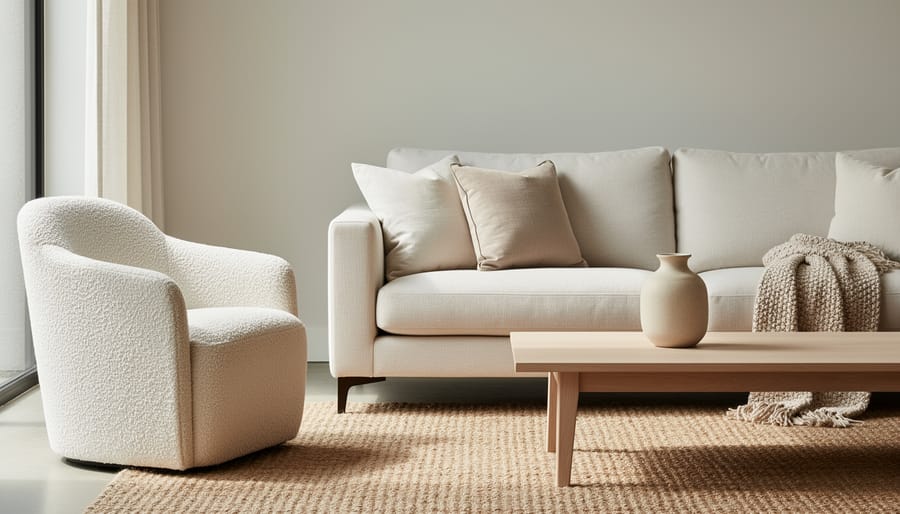
A single-color palette might sound like the safe, boring choice, but modern design proves otherwise. When you layer different textures within one color family, think crisp white linen curtains paired with a plush ivory velvet sofa and rough-woven jute rugs, you create visual complexity that feels anything but flat. The magic lies in how light plays across varied surfaces: matte walls absorb it, glossy ceramic lamps reflect it, and nubby throw blankets catch it in their weaves. This approach gives you the calm, cohesive look that defines modern style while keeping shopping surprisingly manageable since you’re hunting for texture rather than coordinating multiple hues.
Monochromatic doesn’t mean sterile whites only. Warm beiges layered with linen, rattan, and soft wool create inviting modern spaces perfect for living rooms. Charcoal grays gain depth through mixing matte blackout curtains, brushed nickel hardware, and chunky knit throws. The secret is varying the finish and weight of materials, pair smooth leather with rough concrete planters, or silky cushions with rustic wooden bowls. You’ll find texture-rich pieces at contemporary retailers like West Elm, but thrift stores and home goods sections offer affordable linen napkins, woven baskets, and ceramic vases that punch above their price point. The beauty of this idea is you can start small, adding one textured element at a time, watching your space gain sophistication without the chaos of clashing colors.
4. Organic Materials and Natural Elements
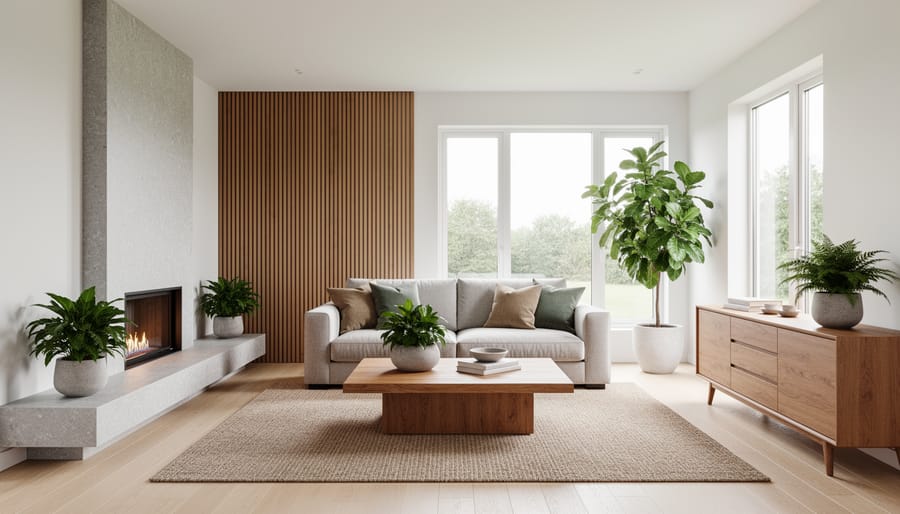
Modern design’s crisp lines and clean surfaces shine brightest when balanced with organic warmth. Wood, stone, rattan, and live greenery prevent minimalist spaces from feeling cold or sterile while maintaining the uncluttered aesthetic that defines contemporary style.
Start with wood tones that complement your existing palette. A reclaimed wood coffee table or floating shelves in walnut or oak introduce natural grain patterns without visual clutter. Thrift stores and architectural salvage shops offer affordable finds, a vintage teak credenza or weathered wood bench can anchor a room for a fraction of retail prices. Sand and refinish pieces yourself to customize the tone, keeping the wood grain visible rather than painting over it.
Stone and concrete elements add sculptural weight. A marble serving tray, slate coasters, or a concrete planter become functional art pieces. These materials work particularly well in monochromatic schemes, where their natural variations create interest within a limited color range.
Rattan and woven textures soften hard edges. A rattan pendant shade, bamboo blinds, or a jute rug introduce organic patterns that feel deliberate rather than busy. Look for pieces with clean silhouettes so the material itself provides the visual interest.
Live plants remain the most transformative natural element. A fiddle-leaf fig in a simple white pot, trailing pothos on open shelving, or a collection of succulents in geometric planters bring life and air-purifying benefits. Start with low-maintenance varieties and cluster plants in odd-numbered groupings for impact. The greenery creates focal points while reinforcing modern design’s connection to intentional, livable spaces.
5. Gallery Walls with Contemporary Art and Photography
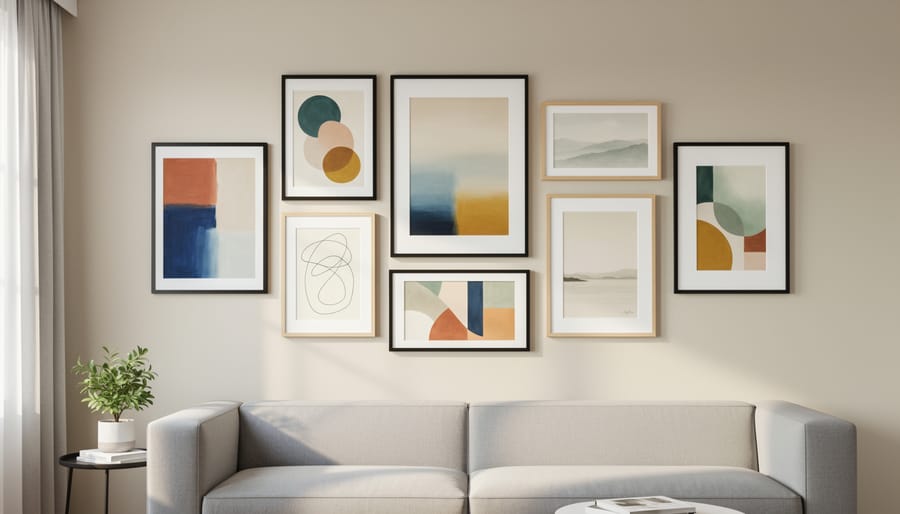
Gallery walls transform blank expanses into focal points without the commitment of built-ins or wallpaper. The modern approach favors intentional curation over wall-to-wall coverage. Think abstract prints in muted tones, high-contrast black-and-white photography, or minimalist line drawings that echo the clean aesthetics you’re building elsewhere in your space.
Framing strategy matters more than most people realize. Matching frames in black, natural wood, or white create instant cohesion and let the artwork speak. If you prefer varied frames, stick to a tight color palette of two or three finishes and maintain consistent matting. White mats universally elevate inexpensive prints and create breathing room between pieces.
Budget-friendly art abounds if you know where to look. Printable downloads from independent artists on Etsy often cost less than $10, and you control the sizing. Thrift stores yield surprisingly good frames once you replace the contents. Museum gift shops and university art sales offer affordable limited-run prints. Your own travel photography, printed large-format at a local shop, adds personal connection that no purchased print can match.
Layout separates curated from cluttered. Arrange pieces on the floor first, maintaining 2-3 inches between frames. Anchor the arrangement with one larger piece rather than scattering same-sized prints. Asymmetry feels more modern than rigid grids. Use painter’s tape to map positions on the wall before committing to nail holes, and hang the center row at eye level, roughly 57-60 inches from the floor.
6. Open Shelving for Form and Function
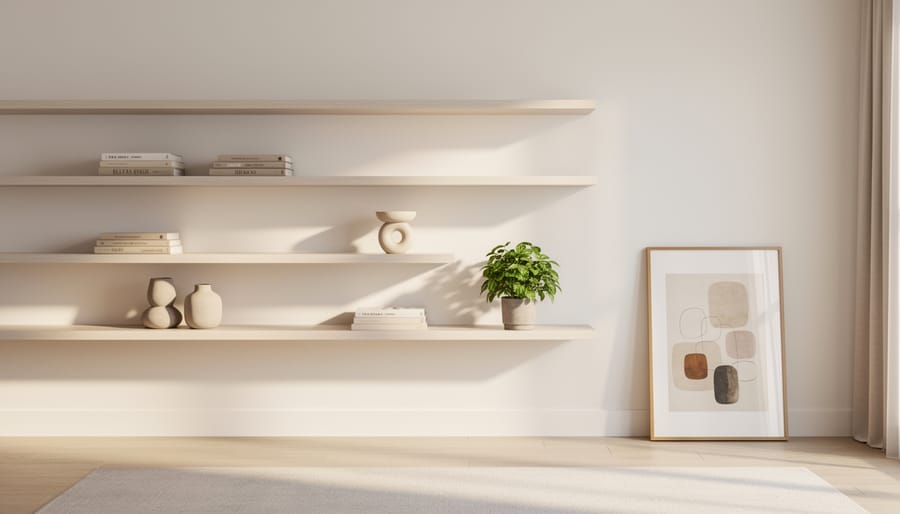
Open shelving transforms blank walls into functional displays that showcase your personality while keeping everyday items accessible. Floating wood shelves or sleek metal brackets create that signature modern look without the visual weight of traditional bookcases.
The rule of thirds works beautifully here: divide each shelf into three zones, placing a taller object in one section, medium items in another, and leaving the final third partially empty. This negative space prevents shelves from looking cluttered and lets individual pieces breathe. Stack three coffee table books vertically, lean a small framed print against the wall, tuck a sculptural ceramic vase beside them, and you’ve created visual interest without filling every inch.
Contemporary design sources like Jonathan Adler offer modern accessories perfect for shelf styling, geometric candleholders, abstract sculptures, or bold decorative objects that anchor your display. Mix in natural elements like a small potted plant or a piece of driftwood to soften the modern edge.
Keep displays fresh by rotating items seasonally rather than buying new pieces constantly. Move that brass bowl from the kitchen shelf to the living room, swap books between rooms, or simply rearrange heights and groupings every few months. Group items in odd numbers (three or five objects work better than even pairs), and vary heights within each grouping.
Start with one well-styled shelf rather than tackling an entire wall system. You’ll develop your eye for what works, and you can expand gradually as you find pieces you genuinely love.
7. Mixed Metals for Visual Interest
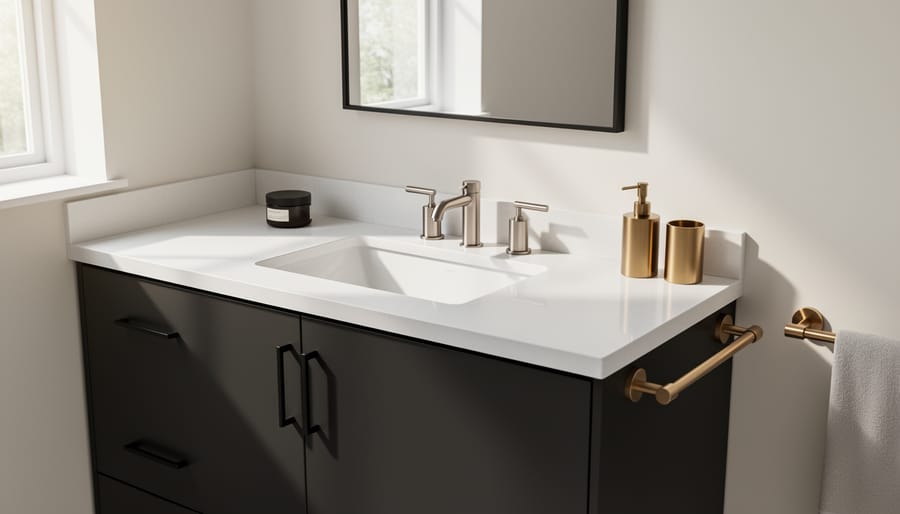
Gone are the days when every fixture in your home needed to match perfectly. Modern design has fully embraced the art of metal mixing, and it’s one of the most impactful ways to add sophistication without major investment.
The key to successful metal mixing is establishing a dominant metal (choose one that appears in 60-70% of your metal elements) and then layering in one or two accent finishes. For example, you might make brushed nickel your primary metal through cabinet hardware and plumbing fixtures, then introduce warmth with brass light fixtures and a few matte black accents in picture frames or curtain rods. This ratio prevents the look from feeling chaotic while creating visual richness.
Start with the easiest, most budget-friendly changes: cabinet pulls, drawer handles, and switch plates. Swapping these takes minutes and immediately updates your space. From there, consider light fixtures, faucets, and curtain hardware as you’re ready. Warm metals like brass and rose gold pair beautifully with cooler tones like chrome or matte black, creating contrast that feels intentional rather than haphazard.
The beauty of this approach is flexibility. You don’t need to replace everything at once. Add a brass table lamp to a room with existing chrome hardware, or introduce matte black shelving brackets alongside your brushed nickel door handles. Modern style celebrates these thoughtful combinations, proving that perfection isn’t about uniformity, it’s about purposeful contrast.
8. Strategic Negative Space and Decluttering
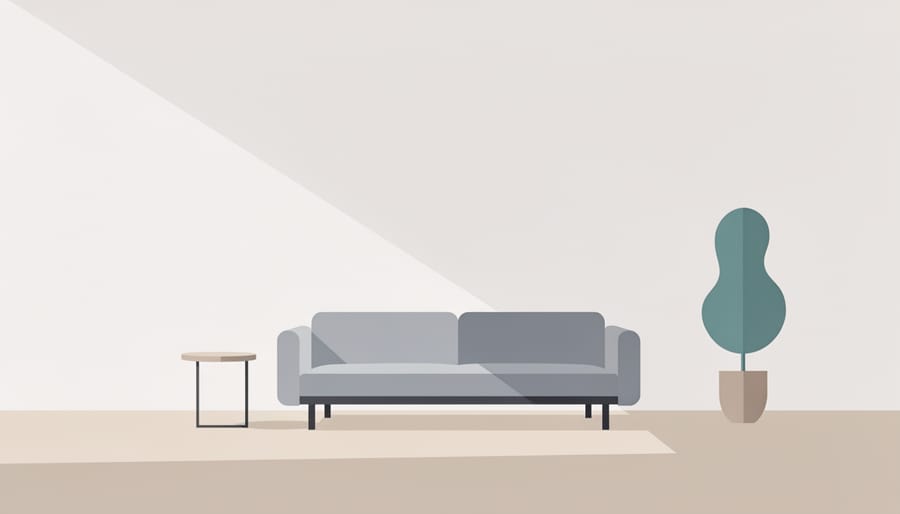
Here’s the irony: the most transformative modern decor idea costs nothing. Strategic negative space, the intentional emptiness between and around your possessions, is modern design’s secret weapon. While other styles pack surfaces and walls with decorative objects, modern celebrates breathing room. That single sculptural vase looks ten times more impactful on an otherwise-clear console than surrounded by photo frames, candles, and trinkets.
Start by editing surfaces. Clear your coffee table completely, then return only one or two items, a design book and a simple tray, perhaps. Notice how your eye actually focuses on these pieces now instead of skimming past visual clutter. Apply this same principle to shelving: the rule of thirds suggests filling only two-thirds of available space, leaving the rest empty.
Furniture arrangement matters equally. Pull pieces slightly away from walls to create flow and breathing room. Remove one accent chair if your living room feels cramped, sometimes fewer, better-placed pieces make a space feel larger and more intentional.
This doesn’t mean cold or unwelcoming. Strategic negative space lets your chosen items breathe and your room’s architecture shine. That beautiful window trim you never noticed? It emerges when you remove the overstuffed bookshelf blocking it. Your space gains clarity, calm, and unmistakably modern sophistication without spending a single dollar.
Bringing It All Together
The beauty of modern home decor is that you don’t need to transform your entire space overnight. Pick one or two ideas that speak to you, maybe a sculptural light fixture or a curated gallery wall, and let your space evolve naturally. Modern style isn’t a rigid formula you need to follow perfectly; it’s a flexible framework that welcomes your existing furniture, family heirlooms, and personal treasures. That mid-century credenza from your grandmother? It belongs in your modern space just as much as a brand-new minimalist sofa.
What once required hiring firms like Vancouver’s is now within reach through these accessible ideas. You’re applying the same design principles that professionals use, balancing form and function, creating visually luxurious interiors through intentional choices rather than expensive overhauls, just at your own pace and budget. The difference between a house and a home you love often comes down to these thoughtful details: the way light plays across a textured throw, the breathing room around your favorite chair, the cohesive story your shelves tell.
Start small, trust your instincts, and remember that the best modern spaces feel like you, only more refined.
Common Questions About Modern Home Decor
What’s the difference between modern and contemporary decor?
Modern design refers to a specific mid-century aesthetic with clean lines and functional forms, while contemporary reflects what’s current right now, which happens to include many modern elements in 2026. For practical purposes, both emphasize simplicity and uncluttered spaces, so the terms often overlap in everyday use.
Can I mix modern decor with other styles?
Absolutely. Modern pieces work beautifully alongside vintage finds, traditional textiles, or bohemian accents, the key is balancing proportions and letting each piece breathe. If you’re moving away from outdated trends in 2026 modern elements provide a fresh foundation that plays well with personal treasures.
How much should I budget for a modern refresh?
You can start with as little as $100 for new throw pillows and a decluttering session, or invest a few thousand in statement furniture from retailers like West Elm. The beauty of modern design is that strategic editing often matters more than spending, so prioritize one or two impactful changes over trying to update everything at once.
Is modern decor kid-friendly and pet-friendly?
Yes, when you choose wisely. Leather sofas, washable slipcovers, and durable materials like metal and sealed wood handle daily life beautifully. Modern’s emphasis on function over fussiness actually makes it practical for real living, just avoid glass coffee tables and delicate white fabrics in high-traffic zones.
The common thread across these questions is that modern decor adapts to your life, not the other way around. Whether you’re renting, raising kids, or working with a tight budget, the principles of clean lines, purposeful pieces, and breathing room scale to fit your situation. Start where you are, choose what genuinely improves your daily experience, and trust that modern style rewards thoughtful curation over perfection.
What Are 3D Kitchen Design Programs (and How Do They Work)?
Modern home decor in 2026 thrives on clean lines, thoughtful minimalism, and spaces that feel both curated and comfortable. You don’t need a complete renovation or designer budget to achieve this look. Eight strategic updates, from statement lighting to textural layering, can transform your home into a contemporary retreat that reflects current design sensibilities while staying true to your personal style. The beauty of modern decor lies in its flexibility. Unlike rigid design rules of the past, today’s approach welcomes a blend of materials, periods, and price points. That sculptural floor lamp from a mid-range ...