

You can turn a post-move bedroom into a genuine retreat in a single weekend, usually for under $100, by doing things in a smart order: clear the floor, make the bed, then layer in light and texture. If you’re still coordinating the heavy lifting, a crew like All Ways Moving & Storage | Pittsburgh movers can get your furniture placed in the right spots on day one, which saves your back and your Saturday. That’s the whole method. Skip it and you’ll spend a week tripping over boxes while the one room meant for rest feels like a storage unit.
Why start here? Because the bedroom is the room you reset in, and a calm one makes every other unpacking decision easier.
Expect two to four hours of real work, nothing technical, just decisions. You’ll need a few basics: a lamp with a warm bulb, one set of good sheets, and a few hooks or baskets. Think hotel-suite calm on a thrift-store budget. Below, you’ll find the supplies list, a few quick safety checks, the steps in order, and a simple way to tell when the room is done.
What You’ll Need Before You Start: Tools and Materials
Before you tear into a single box, gather a small kit so you’re not hunting for a screwdriver at 10 p.m. with a bare mattress staring at you. The good news: none of this needs a big spend, and most of it is probably already packed in the boxes marked “bedroom” or “misc.”
Tools to have on hand:
- A box cutter or sturdy scissors, since a key works in a pinch if the blade has wandered off.
- A screwdriver or Allen key that fits your bed frame, and the little bag of bolts you hopefully taped to the headboard.
- A tape measure, or a piece of string you can measure against a ruler later.
- Furniture sliders, or an old towel or fleece blanket under the feet of heavy pieces.
- A microfiber cloth for wiping down shelves and drawers, and an old t-shirt does the same job.
Comfort and calm basics:
- Clean, familiar bedding, so wash it before the move if you can and keep it in a bag marked “first night.”
- A bedside lamp with a warm bulb, and a secondhand one is perfect once you swap the shade.
- Curtains or even a temporary sheet over the window for privacy and softer light.
- Baskets or bins for stashing clutter, and thrifted baskets or sturdy shoeboxes work beautifully.
- A throw or extra pillow for that cozy feeling, and borrowing one from the sofa counts.
Think of this as a starter kit rather than a shopping list. If something’s missing, improvise with what you have, because you can always upgrade later.
Safety First: Moving Furniture and Setting Up Without Injury
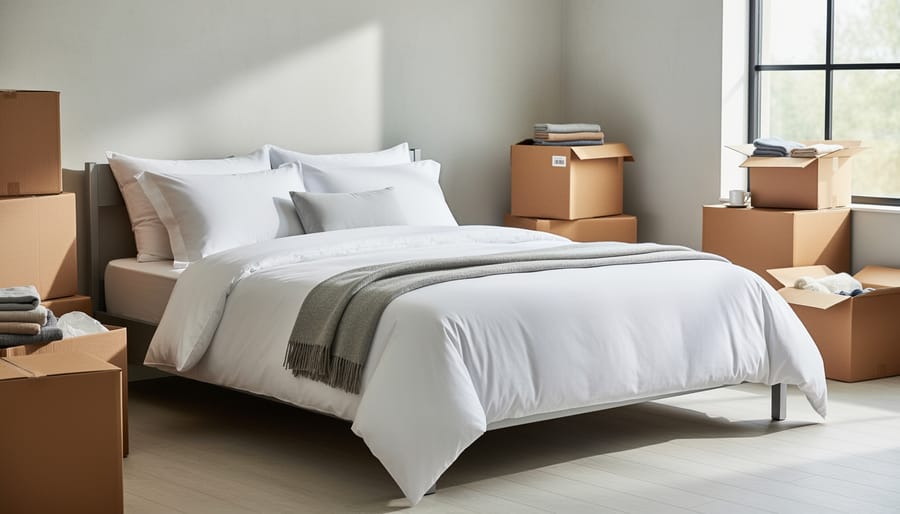
A calm bedroom starts with a safe one, and most moving-day injuries come from rushing the heavy stuff. Slow down here and the rest of the setup gets easier.
Never lift a mattress or a loaded dresser alone. Grab a helper, bend your knees, and keep your back straight. Pull the drawers out first so the dresser is lighter and nothing slides open mid-carry. Skip the dragging, too. Furniture sliders (or even a folded towel under each foot) protect your floors and your lower back, and they make shifting a bed frame almost effortless.
Once the big pieces are in place, think about what’s around your bed. Keep lamp cords and chargers tucked away from bedding and walkways, so nothing tangles your feet at 2 a.m. or heats up under a pillow. Leave the door and any window clear, too. You want an easy exit and some fresh air, not a wardrobe blocking either one.
Know when to stop. If a piece feels too heavy, if the room is too tight to maneuver it, or if a wall anchor won’t hold in the drywall, pause right there. Park the furniture where it’s stable, then get another person or a pro to step in before you continue. The unpacking can wait an hour. Your back can’t wait out an injury.
Step-by-Step: Setting Up a Calm Bedroom After a Move
Start With the Bed and Make It Tonight
The bed is the one piece of furniture that decides how tonight feels, so it goes first. Even if every other box stays taped shut, a made bed gives you a guaranteed spot to rest, and that small win quiets a lot of moving-day noise.
Build the frame first, since a half-assembled bed is just another pile. Lay out the slats and screws, use your Allen key, and tighten everything snugly. Then think about placement. If you can, position the bed so you can see the door from where you sleep, and keep it away from direct draughts, radiators, and windows that rattle. That sightline tends to feel settled without you needing to explain why.
Make it up with bedding you already know and love: your own sheets, your usual pillows, that worn-in blanket. Familiar smells and textures do more for sleep than any new purchase.
Here’s the whole sequence at a glance, so you can treat it like a checklist as you go:
- Assemble the bed frame and tighten every bolt.
- Place the bed with a clear view of the door, away from draughts.
- Make the bed with clean, familiar bedding tonight.
- Map your layout and keep walking paths clear.
- Unpack essentials, then storage, then decor.
- Add soft lamps, curtains, and a throw for the finishing touches.
Do steps one through three tonight, and you’ve already got a calm place to land.
Plan Your Layout and Leave Room to Breathe
Before you muscle anything into place, map the room. Grab your tape measure and a roll of painter’s tape, then mark where the bed, dresser, and nightstands will land. It takes ten minutes and saves you from hauling a heavy dresser across the room twice.
Start with the bed, since it’s the anchor. Leave at least two to three feet of clear path along the sides and foot so you can walk through without turning sideways. Then check the door swing and any closet or window you need to reach.
Aim for visual balance rather than perfect symmetry. A tall dresser on one wall can be offset by a mirror or a pair of shorter pieces opposite. Place nightstands so you can reach a lamp or a glass of water without sitting up or stretching.
Resist filling every wall. Empty space is what lets a room breathe, and it’s a simple way to make your bedroom larger without spending a cent.
Finally, treat this first layout as a trial run. Live with it for a week, then tweak whatever feels off. Painter’s tape makes it easy to change your mind.
Unpack in Layers: Essentials, Storage, Then Decor
Treat unpacking like building a house: foundation first, finishes last. Start with the boxes that make tomorrow morning easier. That means clothes you’ll actually wear this week, pajamas, medications, chargers, and your toiletries bag. Get those into drawers or onto hangers right away so you’re not digging through cardboard at 6 a.m.
Once the daily essentials are settled, turn to storage. This is where a budget mindset pays off. Slide inexpensive bins under the bed for off-season clothes or extra linens. Hang a few over-the-door hooks for robes, bags, and tomorrow’s outfit. Secondhand baskets from a thrift shop or yard sale work beautifully on closet shelves and look more charming than anything plastic and matching. Fold, group, and put like with like as you go, so the closet makes sense from day one.
Decor comes last, and it should feel like a reward. Frame a favorite photo, set out a candle, or lay a beloved throw across the bed. These touches land better in a room that’s already functioning.
Before you open any box marked “bedroom,” set one rule: if it isn’t for sleeping, dressing, or resting, it doesn’t stay. Tools, paperwork, and random kitchen odds and ends go straight to a “wrong room” pile by the door and out of your sanctuary.
Layer in Soft Light, Texture, and a Calming Palette
Harsh overhead light is the fastest way to make a freshly moved bedroom feel like a waiting room. Switch it off in the evening and let a lamp or two do the work instead. Aim for warm bulbs (look for “soft white” or around 2700K) and place a lamp on each side of the bed if you can. Thrifted lamps are perfect here, and a new shade in linen or cream can make a tired base look intentional for a few dollars.
Next, soften the window. Curtains hung a little higher than the frame and long enough to skim the floor make the room feel taller and calmer, even if the fabric is simple. Sheer panels layered with a heavier pair give you daytime glow and nighttime privacy.
Then build texture on the bed. Start with linen-look bedding, which often turns up in sales, and add a chunky throw across the foot plus two or three pillows in varied textures. A cozy rug under the bed, extending past both sides, gives your feet a gentle landing every morning.
Keep the palette low-contrast: warm whites, sand, soft greige, and one muted accent like sage. When colors sit close together, your eyes have fewer places to snag. For more ideas, see our guide to a cozy bedroom on a budget, and for that high-end feel, explore visually luxurious interiors.
How to Tell the Room Feels Calm (and What to Tweak Next)
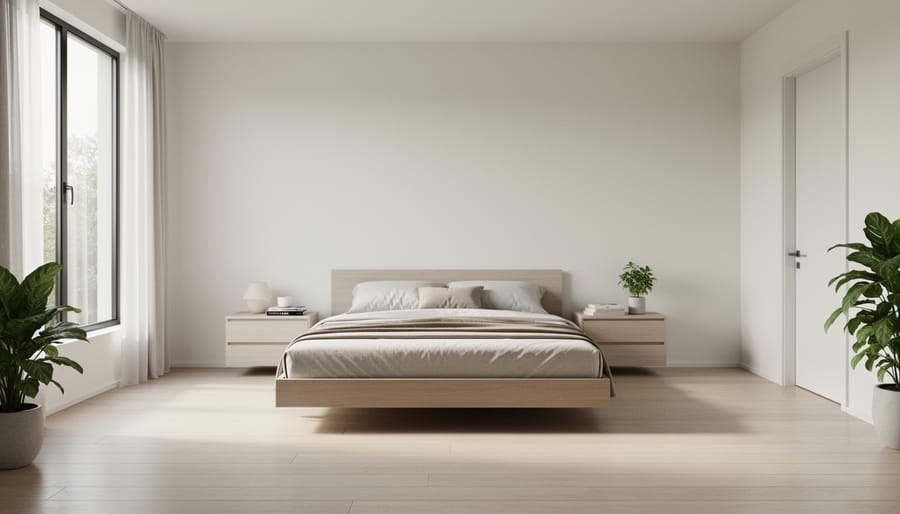
Once everything’s in place, take a few minutes to test the room instead of guessing. Sit on the edge of the bed and look around slowly. If your eyes keep snagging on a pile or a half-empty box, that’s the visual clutter still stealing your calm.
Then check the room at night. Switch off the overhead light and see whether your lamps feel soft and warm or still a bit harsh. Walk from the bed to the door in the dark; if you stub a toe or bump a basket, nudge that piece aside. Finally, just notice the room. Does it smell fresh? Is it quiet enough to drift off?
Over the first few weeks, make small tweaks. Pull a few decor pieces off the shelf, swap a bright bulb for a warm one, or try a gentle scent or a white-noise option. Anything that doesn’t feel right yet can go on a slow wish list, and it helps to spend smarter on decor by buying only what the room proves it needs. There’s no rush, and a half-finished room can still feel peaceful.
Common Questions About Making a Bedroom Feel Calm After a Move
How long does it take to set up a bedroom after a move?
Most people can get the bed made and a clear walkway in a couple of hours, and a fully settled room in a weekend. Give yourself a few days beyond that for the finishing touches, since they matter less than the basics.
What if my bedroom is small or oddly shaped?
Keep furniture low and leave one clear wall or corner empty so your eye has somewhere to rest. Slanted ceilings and awkward nooks often suit the bed, while a slim dresser or under-bed bins handle storage.
How can I make a rental bedroom feel calm without drilling or painting?
Lean on softness you can take with you: warm lamps, curtains on a tension rod, a rug, layered bedding, and removable adhesive hooks. A large framed print propped on a dresser adds personality with no holes.
Should I unpack the bedroom before other rooms?
Yes, if you can only pick one. A rested you will tackle the kitchen and living room far more cheerfully than a worn-out one.
Keeping the bedroom calm while the rest of the house is still in boxes mostly comes down to one rule: nothing gets parked in there. Stack unrelated boxes in the hall or a spare room, and if the door has to stay shut, let it. A single closed door and a made bed can feel like a small, quiet hotel room at the end of a chaotic day.
You don’t need a finished room to feel at home again. A calm bedroom after a move comes down to a simple order: bed first, then a layout with room to breathe, then the essentials, and finally the soft light and texture that make it feel like yours. None of it demands a big budget. A thrifted lamp, a sale throw, and a few secondhand baskets can do more for the mood than any splurge.
Give yourself permission to go slowly. The decor can wait, and the wish list can grow over the coming weeks. For tonight, just make the bed with your softest sheets, switch on a warm light, and let the rest of the boxes sit.