

Your small bedroom can feel twice its size with strategic design choices that prioritize light, flow, and smart storage. By selecting multi-functional furniture, embracing vertical space, and using a cohesive color palette, you’ll transform even the tightest quarters into a serene, organized retreat without breaking the bank.
The challenge with compact bedrooms isn’t just about fitting everything in. It’s about creating a space that genuinely feels inviting rather than cramped. Most design advice focuses on purging possessions, but that’s only half the story. The real magic happens when you understand how visual tricks, furniture placement, and thoughtful styling work together to reclaim lost square footage.
This guide delivers twelve proven strategies that tackle the root causes of bedroom clutter and claustrophobia. We’ve focused on solutions that work for renters and homeowners alike, with price points ranging from completely free rearrangements to budget-friendly purchases that deliver outsized impact. Each tip addresses a specific spatial challenge, whether that’s awkward layouts, insufficient storage, or poor natural light. You’ll find furniture hacks that create hidden storage, color techniques that push walls outward visually, and lighting setups that make low ceilings disappear.
The best part? None of these require contractor-level skills or trust-fund budgets. These are the same techniques interior designers use to photograph small spaces for magazines, adapted for real life and real budgets. Let’s get started.
How We Chose These Space-Maximizing Tips
We evaluated dozens of space-maximizing strategies and selected these twelve based on four key criteria. First, each tip delivers noticeable practical impact, you’ll actually see and feel the difference in how your bedroom functions. Second, we prioritized budget-friendliness, ensuring most suggestions work with affordable options alongside luxury alternatives. Third, ease of implementation mattered: whether you’re renting or own your home, these tips require minimal commitment and can be reversed or adjusted as needed. Finally, we chose strategies with proven effectiveness in real bedrooms across various sizes and layouts, not just designer showrooms.
The result is a practical roadmap that blends aspirational design with accessible solutions. You won’t find suggestions that require knocking down walls or investing thousands in custom built-ins (unless that’s your preference). Instead, these are the smart, achievable choices that interior designers consistently recommend for maximizing bedroom space while maintaining style and comfort.
1. Choose Multi-Functional Furniture That Works Twice as Hard
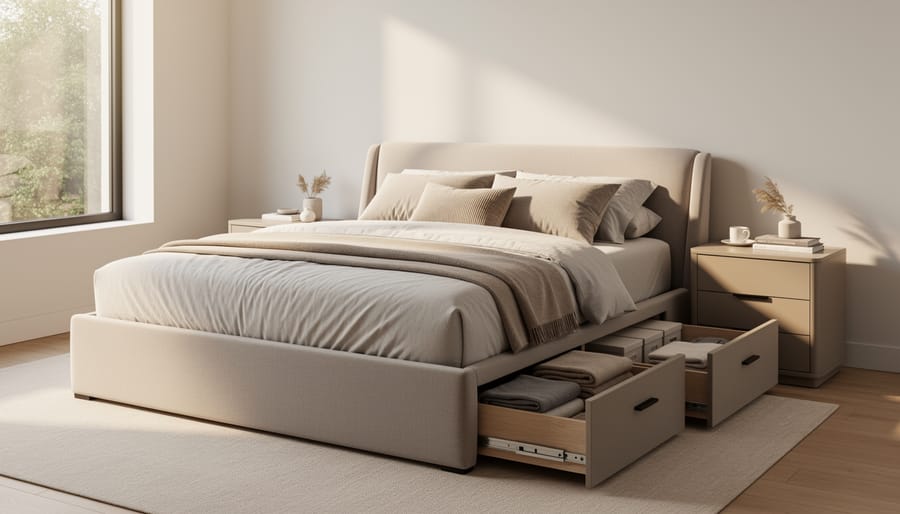
When every piece of furniture pulls double duty, you naturally end up with more room to breathe. Start with a storage bed, the single most impactful swap you can make. Platform beds with built-in drawers or lift-up mattress bases hide linens, off-season clothes, and bulky items you’d otherwise stack in a corner. You’ll find quality options starting around $300, while splurge-worthy upholstered versions with deep storage compartments run closer to $1,200.
Ottomans deserve a second look, too. A cushioned storage ottoman at the foot of your bed holds extra blankets, serves as seating when you’re getting dressed, and costs as little as $60 for a simple cube or $400 for a tufted statement piece. Fold-out desks or wall-mounted drop-leaf tables create a workspace that disappears when you’re done, perfect for renters who can’t commit to a full desk footprint.
The trick is choosing pieces that look intentional, not cobbled together. A sleek storage bench in linen or velvet feels luxurious, while a clunky plastic bin shoved under the bed screams makeshift. Browse space-saving inspiration across different rooms to see how multi-functional design elevates any area. When furniture works harder, your bedroom works better.
2. Embrace Vertical Storage to Free Up Floor Space
When your floor is crowded, the solution is simple: build upward. Vertical storage transforms wasted wall space into functional display and organization while making ceilings feel taller and rooms more spacious.
Wall-mounted shelves above the bed or desk provide homes for books, plants, and decorative objects without consuming precious floor real estate. Choose floating shelves in a neutral color palette that blends seamlessly with your walls, or select darker wood tones for visual contrast. Install them in staggered heights for modern flair or symmetrical rows for a classic look.
Tall bookcases and ladder-style shelving units draw the eye upward, creating vertical lines that emphasize height. Position these pieces in corners or along empty walls to maximize capacity without blocking traffic flow. The higher you store items, the more your ceiling appears to lift.
Floating nightstands eliminate the bulky footprint of traditional bedside tables while offering essential surface space for lamps and phones. Wall-mounted options pair beautifully with airy neutral tones and create a sleek, uncluttered aesthetic.
The key is thinking vertically at every opportunity, your walls are prime real estate waiting to work harder for you.
3. Install Mirrors Strategically to Amplify Light and Space
Mirrors are one of the oldest tricks in the design book for a reason, they genuinely work. When you position a mirror opposite or adjacent to a window, it bounces natural light around the room, instantly making the space feel brighter and more open. A large leaning mirror (think 5 to 6 feet tall) propped against a wall creates dramatic impact without the commitment of drilling holes, perfect for renters.
For smaller bedrooms, consider a mirror above your dresser or nightstand to serve double duty as both functional grooming space and light reflector. Avoid placing mirrors directly facing the bed if it disrupts your sleep, but don’t let that stop you from experimenting with side walls or closet doors.
Budget-friendly options include frameless mirrors from big-box stores starting around $30, while a statement sunburst or arched mirror can become your room’s focal point for under $150. Multiple smaller mirrors arranged in a gallery wall also work beautifully, adding visual interest while amplifying light. The key is choosing placement that captures and spreads natural light throughout the day.
4. Select a Lighter Color Palette for Walls and Linens
Light colors work optical magic in bedrooms by bouncing natural light around the room and pushing walls outward visually. Soft whites, warm beiges, pale grays, and muted pastels create an airy backdrop that makes even compact bedrooms feel generous and calming.
When selecting wall paint, consider shades like Benjamin Moore’s Simply White or Sherwin-Williams’ Agreeable Gray for a timeless foundation. These neutrals pair beautifully with crisp white linens or cream bedding, establishing a serene base that feels expensive without the luxury price tag. Budget-conscious shoppers can achieve similar results with quality paints from brands like Behr or Valspar, which offer excellent coverage and durability at half the cost.
The key to preventing a light palette from feeling flat lies in layering textures rather than introducing dark colors. Think linen duvet covers, chunky knit throws, woven baskets, and natural wood accents. A textured ivory throw pillow adds dimension that a navy one cannot, all while maintaining the spacious feel.
Reserve darker accent colors for small, movable elements like picture frames or decorative objects. This approach lets you refresh the room’s personality seasonally without sacrificing the open, breathable atmosphere that lighter tones provide year-round.
5. Opt for Furniture with Exposed Legs and Open Frames
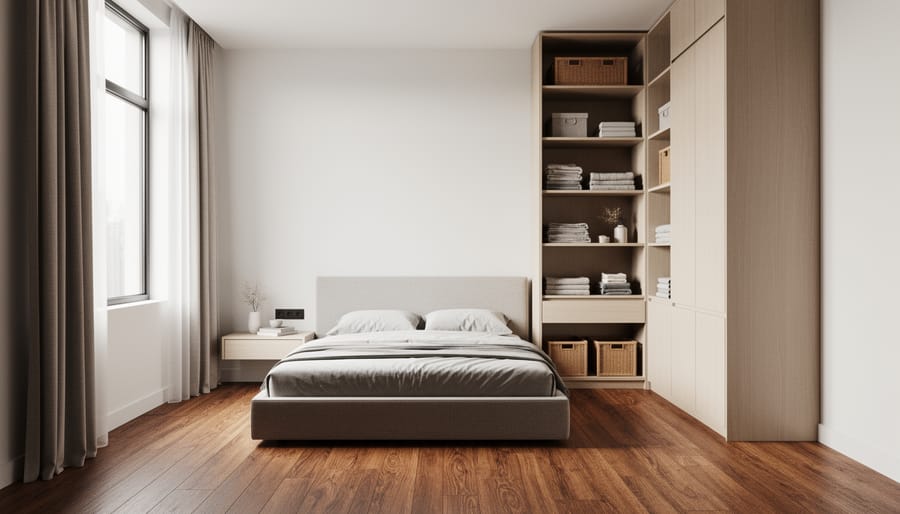
Furniture that sits directly on the floor creates visual weight that can make a bedroom feel cramped and heavy. Choosing pieces with exposed legs lifts them off the ground, allowing light and sight lines to flow underneath. This simple shift creates breathing room and makes your floor space appear larger than it actually is.
A bed frame with legs instead of a solid base to the floor opens up the room dramatically. You’ll see more floor, which tricks the eye into perceiving more space. The same principle applies to dressers, chairs, and benches. Look for pieces with legs at least four to six inches high for maximum visual impact.
Mid-century modern furniture naturally embraces this design approach, but you’ll find lifted styles across every aesthetic from traditional to contemporary. A wooden platform bed with tapered legs brings warmth without bulk. An upholstered chair with slim metal legs adds seating without overwhelming a corner.
The beauty of this tip is its flexibility across budgets. Affordable retailers offer plenty of legged furniture options, while vintage and secondhand pieces often feature this elevated design. You’re not sacrificing storage either. Many raised bed frames still accommodate under-bed bins, and dressers on legs often include just as many drawers as floor-sitting alternatives.
6. Maximize Closet Organization with Smart Systems
A well-organized closet is one of the most powerful tools for reclaiming bedroom space. When your closet works efficiently, you eliminate the need for bulky dressers, overflow storage bins, and that dreaded chair piled with clothes. The secret isn’t necessarily a complete closet system overhaul, it’s strategic use of a few affordable organizers that maximize every inch.
Start with double-hanging rods, which instantly double your hanging capacity. Install one rod at standard height and another about three feet below for shorter items like shirts, folded pants, and skirts. This simple addition costs under $20 and transforms wasted vertical space into functional storage. Pair it with slim velvet hangers that prevent clothes from slipping while taking up half the space of bulky plastic or wooden hangers.
Shelf dividers keep stacks of sweaters, jeans, and linens from toppling into chaotic piles. These wire or acrylic dividers slide onto existing shelves and create defined sections that maintain order. For drawers, inexpensive fabric or bamboo inserts corral socks, underwear, and accessories so you can actually find what you need without digging.
Essential closet organization tools include:
- Double-hanging rods to maximize vertical hanging space for shorter garments
- Shelf dividers that prevent clothing stacks from collapsing into messy piles
- Slim velvet hangers that save space while keeping clothes securely in place
- Drawer inserts that compartmentalize small items and accessories
- Over-the-door organizers for shoes, bags, or scarves without taking up floor space
The beauty of these solutions is their flexibility. Renters can take everything with them, and homeowners can adjust as needs change. When your closet holds more, your bedroom breathes easier.
7. Use Under-Bed Storage Containers and Drawers
The space beneath your bed represents some of the most valuable real estate in your bedroom, yet it often goes completely unused. By implementing the right storage solutions, you can tuck away seasonal clothing, extra linens, and items you don’t need daily access to without adding a single piece of furniture to your floor plan.
Rolling storage bins with wheels make retrieval effortless. Look for low-profile containers specifically designed to slide under standard bed frames, typically 6 to 8 inches high. Clear plastic versions let you see contents at a glance, while fabric bins with handles offer a softer aesthetic. For maximum space efficiency, vacuum-seal bags compress bulky comforters and winter sweaters to a fraction of their original size, though you’ll need to refluff items when you retrieve them.
Pull-out drawer systems offer the most polished solution. These purpose-built units install directly under platform beds or work as standalone pieces that create their own raised foundation. Many come with dividers perfect for organizing shoes, accessories, or off-season wardrobes. If you’re shopping for a new bed frame, prioritize options with built-in drawers to seamlessly combine sleeping and storage functions in one footprint.
8. Hang Curtains High and Wide to Create Visual Height
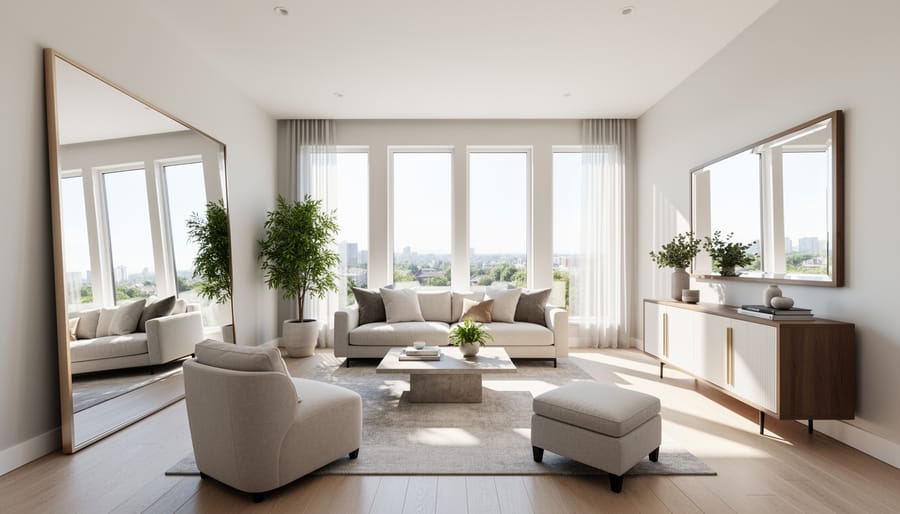
Mounting your curtain rod just below the ceiling line, rather than right above the window frame, creates an instant illusion of taller walls and larger windows. This simple trick draws the eye upward, emphasizing vertical space and making your entire bedroom feel more expansive. Pair this with extending the rod 6-8 inches beyond each side of the window frame, and you’ll also allow maximum natural light to flood in when curtains are open, another space-enhancing benefit.
For budget-conscious designs, floor-length panels in light, flowing fabrics like cotton or linen blends work beautifully without breaking the bank. Stores like IKEA and Target offer affordable options in soft whites and neutrals that complement the airy aesthetic. If you’re ready to invest, consider custom-length drapes in luxe materials like silk or velvet for a polished, high-end look that still follows the high-and-wide principle.
This approach also helps you avoid one of the most common outdated bedroom trends: short, window-hugging curtains that chop the room visually and waste the ceiling height you’ve worked to create. The result is a bedroom that breathes better and feels genuinely spacious, all from strategic fabric placement.
9. Keep Nightstands Compact or Wall-Mounted
Bulky nightstands eat up precious floor space and make already-tight bedrooms feel even more cramped. The solution? Rethink what “bedside table” actually means in your room.
Slim nightstands with a footprint of 12-15 inches wide work beautifully in compact spaces while still holding your phone, lamp, and water glass. Look for models with one drawer or a single shelf, enough storage to keep essentials close without the visual weight of traditional two-drawer pieces. Pedestal-style stands and narrow C-shaped tables that tuck partially under the mattress are budget-friendly finds that deliver function without bulk.
Wall-mounted floating shelves take things further by eliminating floor contact entirely. A simple shelf bracket holds your nighttime necessities at arm’s reach while keeping the floor clear underneath, perfect for tucking slippers or a storage basket. Install them at mattress height, roughly 24-28 inches from the floor, for comfortable access without sitting up.
For renters or commitment-phobes, swing-arm wall lamps paired with a very small catch-all tray on the mattress edge can replace traditional nightstands altogether. This ultra-minimal approach opens up walkways and makes even the tiniest bedroom feel breathable.
10. Limit Decor to Purposeful, Statement Pieces
When you’re working with limited square footage, every item in your bedroom needs to earn its place. The fastest way to make a small bedroom feel cluttered isn’t by adding furniture, it’s by scattering too many knickknacks, decorative pillows, and accessories across every surface. Instead, adopt a curated approach where each piece serves a purpose or makes a visual statement worth the real estate it occupies.
Choose one or two large-scale artworks rather than a gallery wall of small frames. A single oversized canvas or a dramatic mirror above the bed creates impact without the visual noise of multiple pieces competing for attention. The same principle applies to bedside tables: one beautiful lamp and perhaps a small plant or treasured photo beats a jumble of trinkets any day.
Plants bring life to a bedroom, but select one statement fiddle-leaf fig or snake plant in a stylish planter instead of crowding windowsills with tiny pots. Quality over quantity extends to throw pillows, too, limit yourself to two or three in coordinating textures rather than piling six across your bed.
If you need inspiration for how successful designer space ideas embrace restraint, notice how the most luxurious bedrooms feature breathing room around each carefully chosen element. This deliberate approach doesn’t mean your bedroom lacks personality; it means every item you do display gets the attention it deserves.
11. Incorporate Built-In or Corner Solutions
Awkward corners and unused nooks are untapped goldmines in small bedrooms. Instead of letting these spaces collect dust or cramming them with furniture that doesn’t quite fit, transform them into functional storage or seating areas that work with your room’s layout.
Corner shelves are the easiest starting point. Triangular floating shelves fit snugly into corners and provide display space for books, plants, or decorative items without protruding into the room. You can find affordable ready-made corner units at home stores or create a DIY version with basic brackets and cut wood. For renters, removable adhesive strips support lightweight corner shelves without damaging walls.
Built-in wardrobes make the most of alcoves and recessed spaces, creating floor-to-ceiling storage that looks custom and polished. While professional installation offers the most seamless finish, modular wardrobe systems like PAX allow homeowners to achieve a built-in look with some assembly effort. These systems can be customized to fit odd dimensions that standard furniture won’t accommodate.
Window nooks and tight corners can become cozy reading spots with a slim bench and cushions. Add storage beneath the seating for linens or off-season clothing. This dual-purpose approach turns wasted space into a charming focal point while keeping your bedroom organized and spacious.
12. Layer Lighting to Eliminate Dark, Cramped Corners
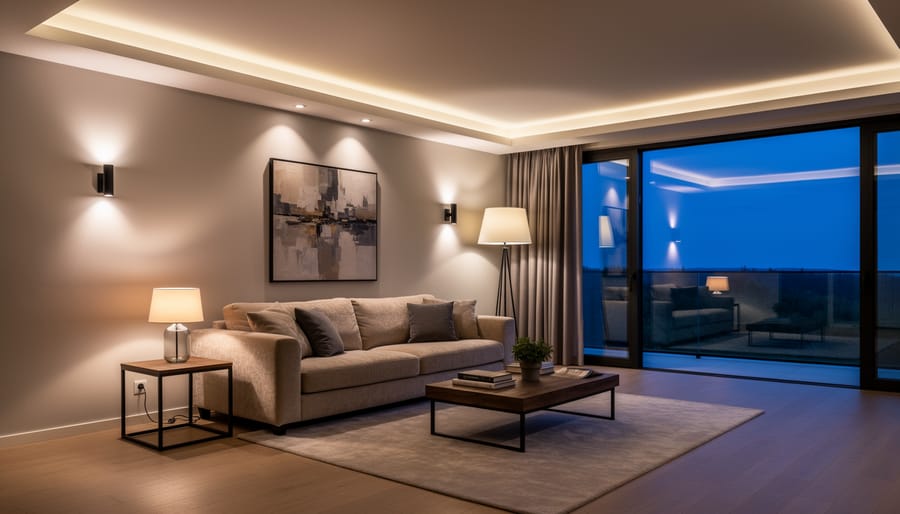
Lighting is one of the most underutilized tools for making a bedroom feel more spacious. Dark corners create visual dead zones that make rooms appear smaller and less welcoming, but a thoughtful lighting strategy opens everything up.
Start with ambient lighting, your main overhead fixture or ceiling light. A central fixture with a dimmer gives you control over the room’s overall brightness. If overhead lighting feels harsh, swap in a fabric shade or frosted globe to diffuse the glow.
Task lighting handles specific needs. A reading lamp on your nightstand or a wall-mounted swing-arm sconce provides focused light exactly where you need it without cluttering surfaces. Wall-mounted options are particularly valuable in tight quarters since they eliminate the footprint of a table lamp entirely.
Accent lighting is where the magic happens. A small LED strip behind your headboard, a corner floor lamp, or picture lights above artwork draw attention to different areas and prevent shadowy corners from swallowing space. These layers create depth and dimension.
Budget-friendly options include affordable clip-on spotlights, battery-operated puck lights for closets, and plug-in wall sconces that require no hardwiring. Even renters can transform a cramped bedroom by adding two or three light sources beyond the standard ceiling fixture.
Making the Most of Your Bedroom Space
Maximizing your bedroom space isn’t about tearing down walls or buying an entirely new furniture set. It’s about making intentional choices that work harder for you. The twelve tips we’ve covered prove that thoughtful design, whether it’s choosing furniture with exposed legs, embracing vertical storage, or layering your lighting, can dramatically transform how spacious and inviting your bedroom feels.
You don’t need to tackle everything at once. Pick one or two strategies that resonate with your specific challenges and budget, then build momentum from there. Maybe you start by decluttering your closet with affordable organizers, or perhaps you swap out your bulky nightstands for sleek wall-mounted shelves. Each small change compounds, gradually opening up your room while reflecting your personal style.
The beauty of these design tips is their flexibility. Renters can embrace temporary solutions like under-bed storage and strategic mirrors, while homeowners might invest in built-in systems or quality multi-functional pieces. Regardless of your starting point or budget, a more spacious, serene bedroom retreat is within reach, one smart decision at a time.
Common Questions About Maximizing Bedroom Space
What size bed should I choose for a small bedroom?
A full or queen bed usually works best in compact bedrooms, providing comfort without overwhelming the space. If your room is truly tiny (under 10×10 feet), consider a twin XL or daybed that doubles as seating during the day.
How can renters maximize bedroom space without making permanent changes?
Focus on freestanding furniture with built-in storage, removable wall hooks, over-the-door organizers, and tension rods for hanging solutions. Command strips allow you to mount lightweight shelves and mirrors without damaging walls, and all of these options move with you.
What’s the best color to make a small bedroom feel larger?
Soft whites, warm creams, and light grays reflect the most light and create an open, airy feeling. You can add depth through textured bedding and natural wood tones rather than relying on dark accent walls, which tend to make small rooms feel smaller.
Where should I invest my budget first when maximizing bedroom space?
Start with a quality storage bed or under-bed containers, since reclaiming that hidden space delivers the biggest impact for your money. Your second priority should be proper lighting, which costs less than new furniture but transforms how spacious the room feels.
Can I make a bedroom feel bigger without getting rid of furniture?
Absolutely. Rearranging furniture to float pieces away from walls, swapping bulky nightstands for wall-mounted shelves, and adding mirrors opposite windows creates openness without sacrificing function or replacing what you already own.
These questions reflect what homeowners and renters genuinely wonder when tackling cramped bedrooms. The answers cut straight to practical solutions you can implement this weekend, whether you’re working with a tight budget, rental restrictions, or furniture you’d rather keep. Small bedrooms present real challenges, but they also push you toward smarter, more intentional design choices that often result in cozier, more personal spaces than oversized rooms ever achieve.
Home Selling Timeline: How Much Does Remortgaging Cost When Your Fixed Rate Ends? (2026)
Your small bedroom can feel twice its size with strategic design choices that prioritize light, flow, and smart storage. By selecting multi-functional furniture, embracing vertical space, and using a cohesive color palette, you’ll transform even the tightest quarters into a serene, organized retreat <a href="https://www.home-and-bedroom.com/transform-your-bedroom-into-a-cozy-retreat-without-spending-a-fortune/">without breaking the bank</a>. The challenge with compact bedrooms isn’t just about fitting everything in. It’s about creating a space that genuinely feels inviting rather than cramped. Most design advice ...